

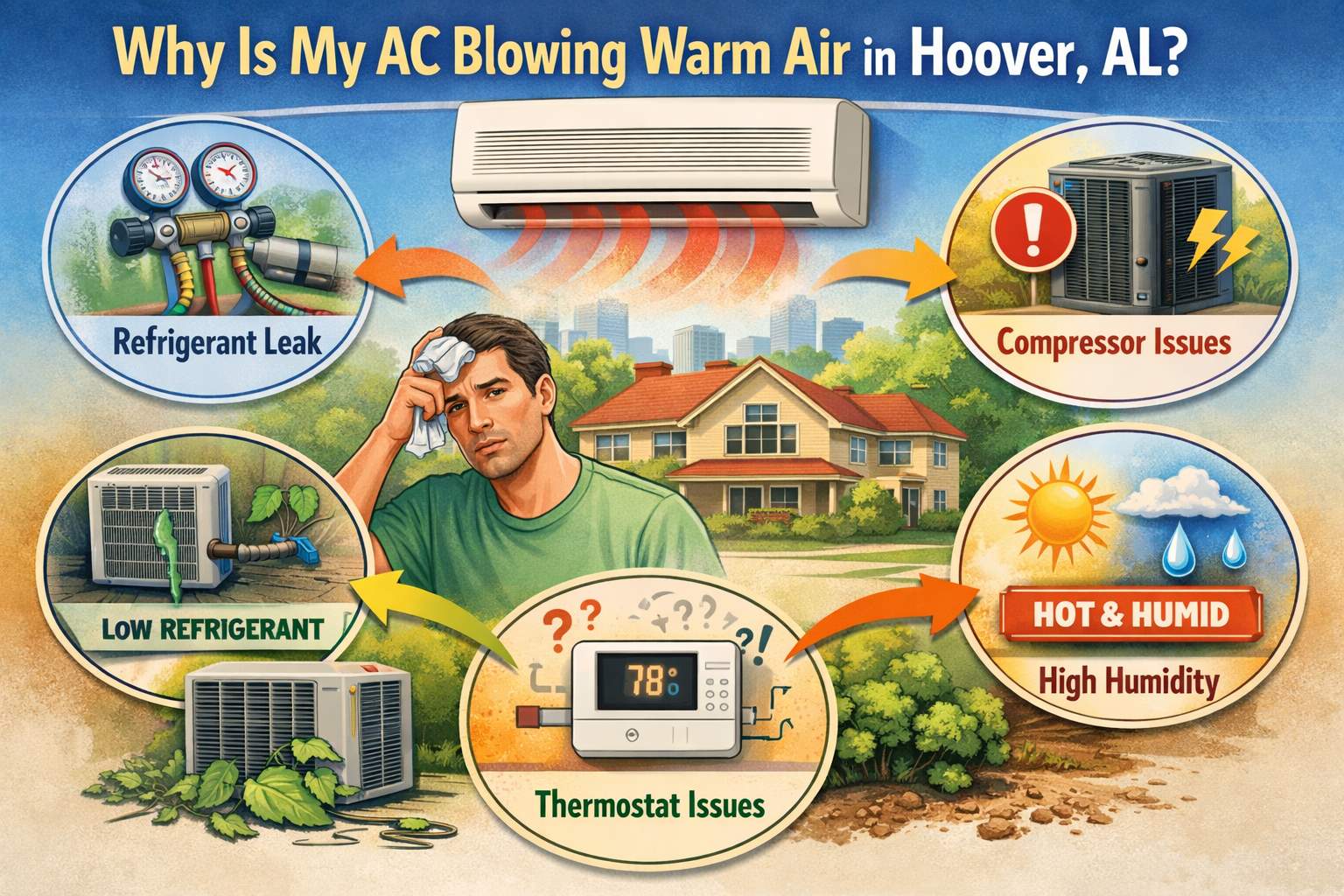
If your air conditioner in Hoover is running but blowing warm air, it’s a clear sign that something in your cooling system isn’t performing correctly and the sooner you understand what’s wrong, the sooner your home can be cool and comfortable again.
In central Alabama’s heat and humidity, your air conditioner works harder than in many other climates, so small issues can quickly turn into big problems.
Here’ are the most common causes we experience, why they happen, and what you should do next.
1. Low Refrigerant or a Refrigerant Leak
Refrigerant is the substance inside your AC that actually removes heat from the indoor air and carries it outside. If your system is low on refrigerant , almost always due to a leak, — it can’t absorb heat efficiently, so what comes out of the vents feels warm.
Signs your refrigerant may be low:
-
Warm air even when the system sounds like it’s running normally
-
Hissing or bubbling noises near refrigerant lines
-
Ice or frost forming on the refrigerant lines or evaporator coil
Because refrigerants are regulated and can be hazardous, diagnosing leaks and recharging requires a licensed HVAC technician.
2. Compressor Problems
The compressor is the heart of your AC’s cooling cycle. It pressurizes and moves the refrigerant through the system. If the compressor isn’t working properly — due to electrical issues, mechanical wear, or overheating from heavy use — the refrigerant can’t circulate and the system can’t produce cool air.
Common signs of compressor issues:
-
Loud rattling, clicking, or buzzing noises
-
Breaker trips when the AC tries to start
-
AC runs but won’t cool at all
Compressor problems often require professional repair or replacement and can be expensive, especially on older systems.
3. Airflow Restrictions
Even if your refrigerant and compressor are fine, your AC still needs air moving through the system for cooling to happen. Restricted airflow can make your unit blow warm or lukewarm air.
Airflow restrictions can come from:
-
Clogged air filters. Dirty filters block air from reaching the evaporator coil, which can also lead to ice build-up and warm output.
-
Blocked vents or return grilles. Furniture, rugs, or curtains can prevent proper circulation.
-
Obstructed outdoor unit. Leaves, grass, or debris around the condenser reduce its ability to release heat.
-
Dirty evaporator or condenser coils. When coils are clogged with dust and grime, heat transfer becomes inefficient.
What you can check:
Replace or clean filters if dirty (every 1–3 months), ensure vents are open, and keep the outdoor unit clear of debris.
4. Thermostat Communication and Settings
Sometimes the issue isn’t the AC equipment at all, it’s the control. If your thermostat isn’t correctly communicating with your system, your AC might not engage the cooling cycle properly.
Here’s what to check:
-
Make sure the thermostat is set to Cool and the temperature is set lower than the room temperature.
-
If your thermostat has separate Fan settings, “Auto” is usually best so the fan only runs during active cooling.
-
Old batteries or faulty thermostat wiring can also send incorrect signals.
Smart thermostats and modern controls help reduce miscommunication, but a technician may still be needed if the thermostat is malfunctioning.
5. Alabama Humidity and System Load
Hoover’s hot and humid climate plays a significant role in how your AC performs. High humidity makes indoor air feel warmer and forces your AC to work harder to remove both heat and moisture from the air. Without proper humidity control and airflow, even a working AC can feel like it’s underperforming.
In humid conditions:
-
Systems run longer to reach set temperatures
-
Evaporator coils may sweat or freeze due to moisture buildup
-
Condenser units must reject more heat outdoors
Maintaining clean coils, proper airflow, and regular maintenance becomes especially important in Hoover’s summer climate.
6. Other Potential Causes to Know
While less common, these issues can also contribute to warm air output:
- Faulty electrical components: Loose wiring, blown fuses, or tripped breakers can interrupt the cooling cycle.
- Leaky or damaged ductwork: If cool air leaks out before it reaches your rooms or hot attic air leaks in your vents can feel warm even if the AC is producing cold air at the source.
- Improper system sizing or age: An AC unit that’s too large or too small for your home may short-cycle or struggle to cool properly. Older systems lose efficiency with age.
What to Do Next
If your AC is blowing warm air and:
-
It’s the middle of summer, don’t wait, heat buildup can stress components further.
-
You’ve checked filters and thermostat settings and it still feels warm, it’s likely a deeper issue like refrigerant, airflow, or compressor trouble.
The safest and most effective step is to schedule a professional HVAC inspection. A trained technician can diagnose the specific cause, ensure proper refrigerant charge, verify airflow pathways, and give you a clear repair plan.
Preventing Warm Air Problems in the Future
1. Regular Maintenance: Annual spring tune-ups before heavy cooling demand help catch issues early.
2. Change Filters Often: Every 1–3 months, depending on use and indoor air quality.
3. Keep Outdoor Unit Clean: Clear vegetation and debris around the condenser to maintain heat rejection efficiency.
4. Upgrade Thermostat: Smart thermostats can improve communication and efficiency.
Warm air from your AC in Hoover isn’t normal — it’s a symptom with several possible causes:
| Cause | Why It Happens |
|---|---|
| Refrigerant leak/low levels | System can’t absorb and remove heat |
| Compressor failure | Refrigerant circulation stops |
| Restricted airflow | System overheats or coils freeze |
| Thermostat issues | System isn’t being properly controlled |
| Humidity stress | Extra moisture increases system load |
Need Help Now?
Understanding these relationships, between airflow, refrigerant, compressor, thermostat, and humidity, helps you diagnose the cause, not just the symptom. If simple checks like filters and settings don’t fix it, a professional HVAC inspection is the next step.
By addressing the root cause, not just the symptom, you’ll restore cooling more reliably and protect your air conditioner against future breakdowns.